
Search Engine Optomization
Search engine optomization is the process of improving a website so it ranks higher in search engine results pages (SERPs). In today’s digital world, having a well-optimized website is no longer optional—it is essential. Businesses that invest in search engine optomization gain more visibility, attract quality traffic, and build long-term online authority.
Search engines like Google use complex algorithms to decide which pages appear first. By understanding how these systems work and applying proven SEO techniques, you can improve your website’s performance and reach the right audience at the right time.
What Is Search Engine Optomization?
Search engine optomization refers to a collection of strategies used to enhance a website’s structure, content, and performance so search engines can easily understand and rank it. The primary goal is to increase organic (non-paid) traffic.
SEO focuses on:
- Improving content relevance
- Optimizing technical website elements
- Building authority and trust
When done correctly, search engine optomization helps your website appear when users search for products, services, or information related to your business.
Why Search Engine Optomization Is Important
Search engine optomization plays a critical role in online success. Most users never scroll past the first page of search results. If your website is not visible there, you are likely losing valuable traffic to competitors.
Key Benefits of SEO:
- Increases website visibility
- Drives high-quality organic traffic
- Improves user experience
- Builds brand credibility and trust
- Delivers long-term marketing results
Unlike paid ads, SEO continues to generate results over time without ongoing ad spend.
How Search Engines Work
Search engines operate through three main processes:
- Crawling – Bots scan web pages to discover content
- Indexing – Pages are stored and organized in databases
- Ranking – Algorithms determine the best results for each query
Search engine optomization ensures your website is crawlable, indexable, and optimized to rank competitively.
On-Page Search Engine Optomization
On-page SEO focuses on optimizing elements within your website.
Important On-Page SEO Factors:
- Keyword-optimized titles and headings
- High-quality, original content
- Internal linking
- Optimized images with alt text
- Clean URL structures
Using the focus keyphrase search engine optomization naturally in headings and content helps search engines understand your page topic.
Off-Page Search Engine Optomization
Off-page SEO involves activities outside your website that improve authority and trust.
Common Off-Page SEO Techniques:
- Backlink building
- Brand mentions
- Guest blogging
- Social media engagement
High-quality backlinks from trusted websites signal to search engines that your site is reliable and valuable.
Technical Search Engine Optomization
Technical SEO ensures your website performs well and meets search engine requirements.
Technical SEO Best Practices:
- Fast page loading speed
- Mobile-friendly design
- Secure HTTPS connection
- XML sitemaps
- Proper indexing and crawlability
A technically sound website improves rankings and user satisfaction.
Content and Search Engine Optomization
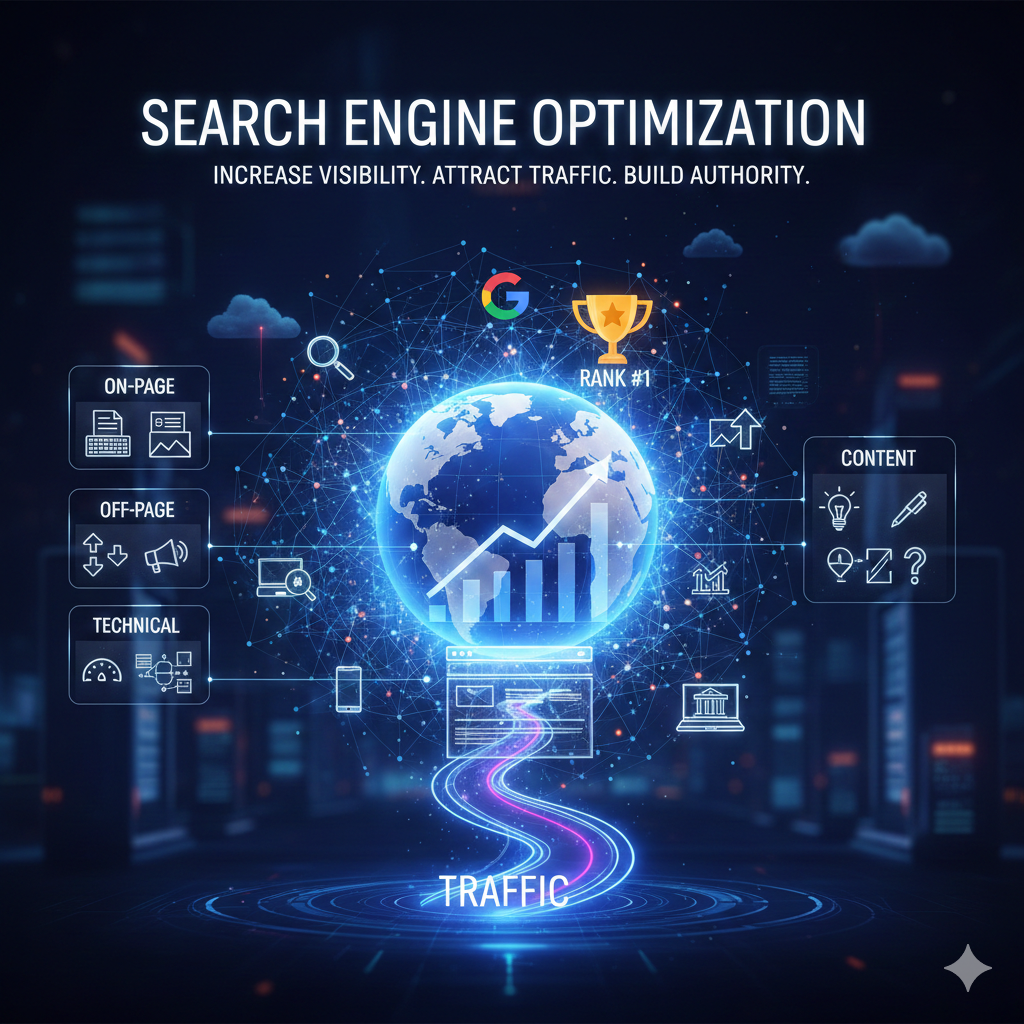
Content is the foundation of search engine optomization. Search engines prioritize content that is helpful, relevant, and easy to understand.
SEO Content Tips:
- Answer user search intent clearly
- Use simple language (Grade 7 level)
- Include headings and bullet points
- Update content regularly
Well-written content keeps visitors engaged and encourages longer site visits.
Local Search Engine Optomization
Local SEO helps businesses appear in location-based searches.
Local SEO Strategies:
- Optimize Google Business Profile
- Use local keywords
- Collect customer reviews
- Maintain consistent business information
Local search engine optomization is especially important for service-based and brick-and-mortar businesses.
Common Search Engine Optomization Mistakes
Avoid these common SEO errors:
- Keyword stuffing
- Duplicate content
- Ignoring mobile optimization
- Slow website speed
- Poor-quality backlinks
Fixing these issues can significantly improve your rankings.
Frequently Asked Questions (FAQs)
What is search engine optomization used for?
Search engine optomization is used to improve website rankings, visibility, and organic traffic from search engines.
How long does SEO take to show results?
SEO results typically take 3–6 months, depending on competition and strategy.
Is search engine optomization better than paid ads?
SEO offers long-term value, while paid ads provide immediate but temporary results.
Do small businesses need SEO?
Yes, search engine optomization helps small businesses compete and attract local customers.
Is SEO still relevant in 2026?
Absolutely. SEO continues to evolve and remains essential for online success.
Can I do search engine optomization myself?
Basic SEO can be done самостоятельно, but professional help ensures faster and better results.
Conclusion
Search engine optomization is a powerful digital marketing strategy that helps websites grow organically, attract targeted traffic, and build trust online. By focusing on quality content, technical performance, and user experience, businesses can achieve sustainable search engine rankings.
Investing in search engine optomization today ensures long-term visibility and success in an increasingly competitive digital landscape.Search Engine Optomization
Search engine optomization is the process of improving a website so it ranks higher in search engine results pages (SERPs). In today’s digital world, having a well-optimized website is no longer optional—it is essential. Businesses that invest in search engine optomization gain more visibility, attract quality traffic, and build long-term online authority.
Search engines like Google use complex algorithms to decide which pages appear first. By understanding how these systems work and applying proven SEO techniques, you can improve your website’s performance and reach the right audience at the right time.
What Is Search Engine Optomization?
Search engine optomization refers to a collection of strategies used to enhance a website’s structure, content, and performance so search engines can easily understand and rank it. The primary goal is to increase organic (non-paid) traffic.
SEO focuses on:
- Improving content relevance
- Optimizing technical website elements
- Building authority and trust
When done correctly, search engine optomization helps your website appear when users search for products, services, or information related to your business.
Why Search Engine Optomization Is Important
Search engine optomization plays a critical role in online success. Most users never scroll past the first page of search results. If your website is not visible there, you are likely losing valuable traffic to competitors.
Key Benefits of SEO:
- Increases website visibility
- Drives high-quality organic traffic
- Improves user experience
- Builds brand credibility and trust
- Delivers long-term marketing results
Unlike paid ads, SEO continues to generate results over time without ongoing ad spend.
How Search Engines Work
Search engines operate through three main processes:
- Crawling – Bots scan web pages to discover content
- Indexing – Pages are stored and organized in databases
- Ranking – Algorithms determine the best results for each query
Search engine optomization ensures your website is crawlable, indexable, and optimized to rank competitively.
On-Page Search Engine Optomization
On-page SEO focuses on optimizing elements within your website.
Important On-Page SEO Factors:
- Keyword-optimized titles and headings
- High-quality, original content
- Internal linking
- Optimized images with alt text
- Clean URL structures
Using the focus keyphrase search engine optomization naturally in headings and content helps search engines understand your page topic.
Off-Page Search Engine Optomization
Off-page SEO involves activities outside your website that improve authority and trust.
Common Off-Page SEO Techniques:
- Backlink building
- Brand mentions
- Guest blogging
- Social media engagement
High-quality backlinks from trusted websites signal to search engines that your site is reliable and valuable.
Technical Search Engine Optomization
Technical SEO ensures your website performs well and meets search engine requirements.
Technical SEO Best Practices:
- Fast page loading speed
- Mobile-friendly design
- Secure HTTPS connection
- XML sitemaps
- Proper indexing and crawlability
A technically sound website improves rankings and user satisfaction.
Content and Search Engine Optomization
Content is the foundation of search engine optomization. Search engines prioritize content that is helpful, relevant, and easy to understand.
SEO Content Tips:
- Answer user search intent clearly
- Use simple language (Grade 7 level)
- Include headings and bullet points
- Update content regularly
Well-written content keeps visitors engaged and encourages longer site visits.
Local Search Engine Optomization
Local SEO helps businesses appear in location-based searches.
Local SEO Strategies:
- Optimize Google Business Profile
- Use local keywords
- Collect customer reviews
- Maintain consistent business information
Local search engine optomization is especially important for service-based and brick-and-mortar businesses.
Common Search Engine Optomization Mistakes
Avoid these common SEO errors:
- Keyword stuffing
- Duplicate content
- Ignoring mobile optimization
- Slow website speed
- Poor-quality backlinks
Fixing these issues can significantly improve your rankings.
Frequently Asked Questions (FAQs)
What is search engine optomization used for?
Search engine optomization is used to improve website rankings, visibility, and organic traffic from search engines.
How long does SEO take to show results?
SEO results typically take 3–6 months, depending on competition and strategy.
Is search engine optomization better than paid ads?
SEO offers long-term value, while paid ads provide immediate but temporary results.
Do small businesses need SEO?
Yes, search engine optomization helps small businesses compete and attract local customers.
Is SEO still relevant in 2026?
Absolutely. SEO continues to evolve and remains essential for online success.
Can I do search engine optomization myself?
Basic SEO can be done самостоятельно, but professional help ensures faster and better results.
Conclusion
Search engine optomization is a powerful digital marketing strategy that helps websites grow organically, attract targeted traffic, and build trust online. By focusing on quality content, technical performance, and user experience, businesses can achieve sustainable search engine rankings.
Investing in search engine optomization today ensures long-term visibility and success in an increasingly competitive digital landscape.